A Conservative Perspective on Alternative Assets
Fine wine has emerged as a recognized component of diversified wealth strategies, particularly among European family offices and Asian collectors. It is tangible, finite, and historically resilient to macroeconomic volatility.
However, wine is not a commodity. It is agricultural, subject to vintage variation, storage risk, and the intangible variables of critical reputation and collector preference. Investment-grade wine requires patient capital, proper storage, and realistic time horizons.
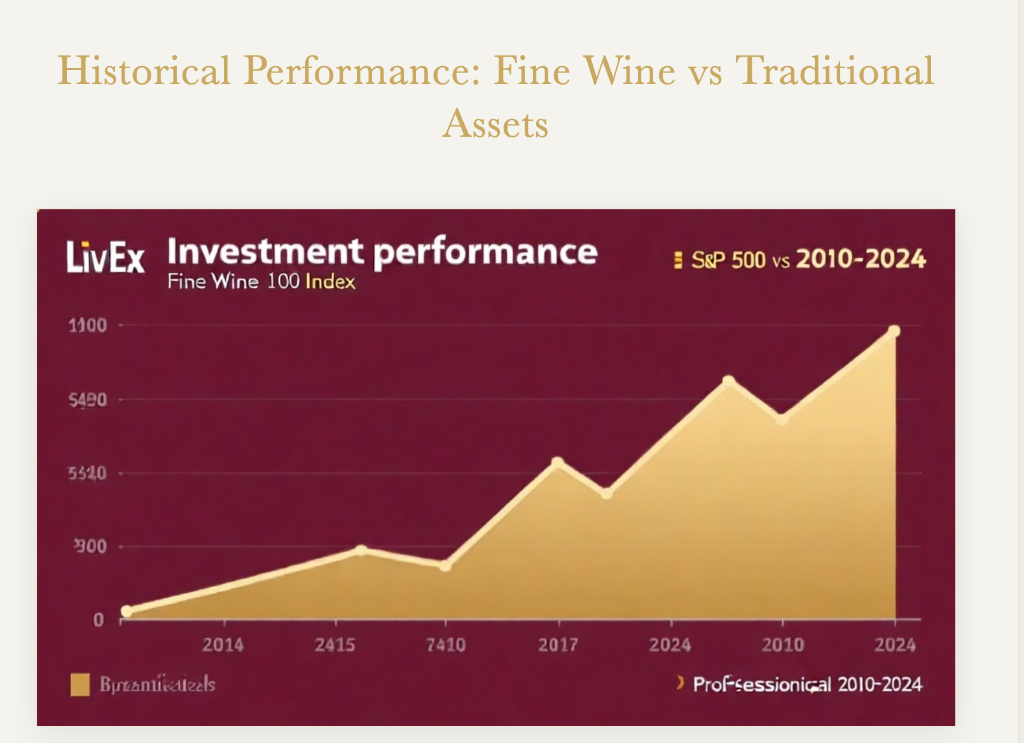
Liv-ex Fine Wine 100 Index performance comparison (2010-2024). Source: Liv-ex, Bloomberg. Past performance does not guarantee future results.
Wine investment is measured in decades, not trading cycles. The finest Bordeaux and Burgundy appreciate gradually as supply diminishes through consumption and bottle age enhances quality for surviving inventory.
We typically recommend minimum holding periods of 10-15 years for investment-grade acquisitions, with optimal returns often realized across 20-30 year horizons.
Authenticity cannot be retrofitted. A First Growth with questionable provenance is worthless regardless of label or vintage. We verify:
Geographic, vintage, and estate diversification is essential:
Unlike traditional assets, wine appreciation is driven partly by consumption. Each bottle drunk reduces global supply. Optimal vintages from top estates become progressively rarer.
This is why patient holding periods and proper storage are crucial—you are waiting for the world to drink its way to your eventual profit.
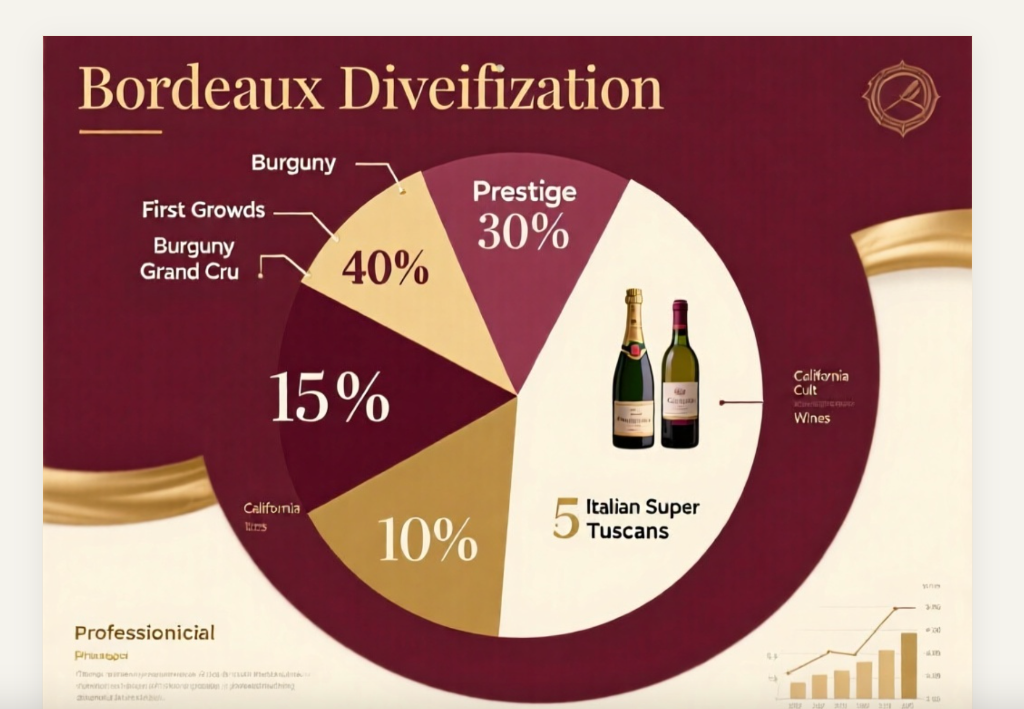
Typical allocation strategy for investment-grade wine portfolios. Actual allocations adjusted based on client objectives, risk tolerance, and market conditions.
Wine markets experience cycles. Prices can stagnate or decline, particularly if you purchase at market peaks or during speculative bubbles. We do not promise returns. We provide historical context and risk-adjusted perspective.
Improper storage destroys value permanently. Heat, light, vibration, and humidity fluctuations ruin wine—and provenance. Investment-grade wine requires bonded, climate-controlled storage with continuous monitoring.
Fine wine is not publicly traded. Sale requires private negotiation, auction consignment, or merchant repurchase—each with transaction costs and timing uncertainties. This is not an asset for near-term liquidity needs.
First Growths, Grand Cru Burgundy, Prestige Champagne—these endure. Trendy producers and speculative allocations come and go. We focus on wines with multi-generational track records and global collector demand.
Our investment recommendations focus on producers with multi-generational reputations, limited production, controlled distribution, and proven secondary market liquidity.
Focus on benchmark vintages (e.g., 1982, 2000, 2005, 2009, 2010) with verified château provenance.
Burgundy requires estate-level knowledge and allocation access. Production is tiny; demand is global and growing.
Champagne offers diversification and aging potential often underestimated by non-specialist investors.
Secondary markets less mature than Bordeaux/Burgundy but demand is strong among American and Asian collectors.
We provide transparent analysis of risks inherent to wine investment. Informed clients make better decisions.
Wine prices fluctuate with economic conditions, collector preferences, and critical opinion. Periods of stagnation or decline occur, particularly following speculative peaks.
Even top estates produce variable quality across vintages. Poor vintages underperform. Critics' vintage revisions can impact prices years after release.
Improper storage destroys value. Lost documentation or questionable ownership history renders bottles unsellable to sophisticated buyers.
Selling wine requires finding buyers, negotiating prices, and accepting transaction costs. Illiquidity is highest during market downturns when you may most need to sell.
Fake wines exist, particularly for the most valuable labels. Verification and trusted sourcing are essential but not infallible.
Tax treatment, import regulations, and duty structures vary by jurisdiction and can change, affecting net returns and transaction costs.
Our wine investment counsel is structured around conservative principles and realistic expectations:
Wine should represent a modest percentage of total investable assets—typically 2-5% for even very wealthy collectors. We help determine appropriate allocation based on your overall portfolio and liquidity needs.
Fifty cases of First Growths with verified provenance outperform five hundred cases of second-tier wines purchased at retail markup. We focus on the former.
Our acquisition strategies assume 15+ year holding periods. Shorter horizons introduce excessive market timing risk and transaction cost drag.
We arrange bonded, climate-controlled storage and comprehensive insurance as part of every investment acquisition. This is non-negotiable for value preservation.
Markets change. New vintages are released. Critical opinion evolves. We provide regular updates to help you make informed decisions about holding, acquiring, or divesting.
If you are considering wine as an alternative asset component and seek conservative, transparent counsel, we invite you to reach out.